By the Slatewave Team
FTC Affiliate Disclosure: Slatewave is reader-supported. Some links in this article are affiliate links, which means we may earn a small commission if you buy something through them — at no extra cost to you.
Quick Links: Our Top Picks
Short on time? Here’s the cheat sheet. We break down the “why” further down the page.
| Category | Our Pick | Best For |
|---|---|---|
| 🏆 Premium Wood | Glorious Gaming Wooden Wrist Rest | Mechanical keyboards, easy wipe-clean upkeep |
| 💰 Value Wood | Walnut Wooden Wrist Rest | A firm, natural-material look for less |
| 🏆 Premium Memory Foam | Razer Ergonomic Wrist Rest | Plush support, leatherette cover, anti-slip base |
| 💰 Budget Memory Foam | Redragon Meteor Wrist Rest | Sized options (TKL or full-size) at an entry price |
| 🏆 Best Cooling Gel | HyperX Wrist Rest | All-day comfort without the heat build-up |
Is a Wrist Rest Actually Worth It?
Short answer: Yes, but only if you use it the right way. This is the part most buying guides skip. A wrist rest isn’t meant to be a pillow your wrists sink into while you type. It’s meant to support your palms during pauses, and to keep your wrists from bending upward against a keyboard that sits taller than your desk surface.
Ergonomics guidance from groups like OSHA and the Mayo Clinic points in the same direction: keep your wrists in a neutral, straight position, and avoid pressing them against hard desk edges. A good wrist rest helps with both. A bad one, or a good one used wrong, can put more pressure on your wrists instead of less.
So whether a rest is “worth it” depends on three things: the height of your keyboard, how you actually type, and which material you pick. Let’s break each one down.
The Core Rule: Rest Your Palms, Not Your Wrists While Typing
How a Wrist Rest Should Actually Work
When you’re typing, your hands should “float” over the keys, with your wrists straight and slightly lifted. The rest is there for the moments in between: pausing to read, thinking, grabbing your mouse. Think of it as a landing pad, not a hammock.
Resting the soft underside of your wrists on a rest and anchoring them there while your fingers stretch to reach keys can bend your wrists sideways and put pressure on the underside of your wrist. If you notice you’re doing this, it’s a sign to either change how you type or switch to a firmer, lower-profile rest.
Why Height Matters More Than Material
The most common wrist rest mistake isn’t choosing the wrong material. It’s choosing the wrong height. If your keyboard sits 1.5 inches tall and your rest is 0.7 inches, your wrists end up bent upward. If the rest is taller than your keyboard, your wrists bend downward. The goal is a rest that sits roughly level with the keys you type on most.
What Our Testing Found
Our team rotated through a wood rest, a memory foam rest, and a cooling gel rest across separate work weeks, using the same keyboard each time. The biggest difference we noticed wasn’t the material itself, it was whether the rest height matched the keyboard. On our mechanical keyboard, the thinner foam rest left our wrists tilting up slightly, while the taller wood rest kept them level. Comfort over a full workday also changed by material: gel stayed noticeably cooler on longer sessions, while memory foam felt warmer after a couple of hours.

Wood vs. Memory Foam vs. Cooling Gel: Material Breakdown
Wood
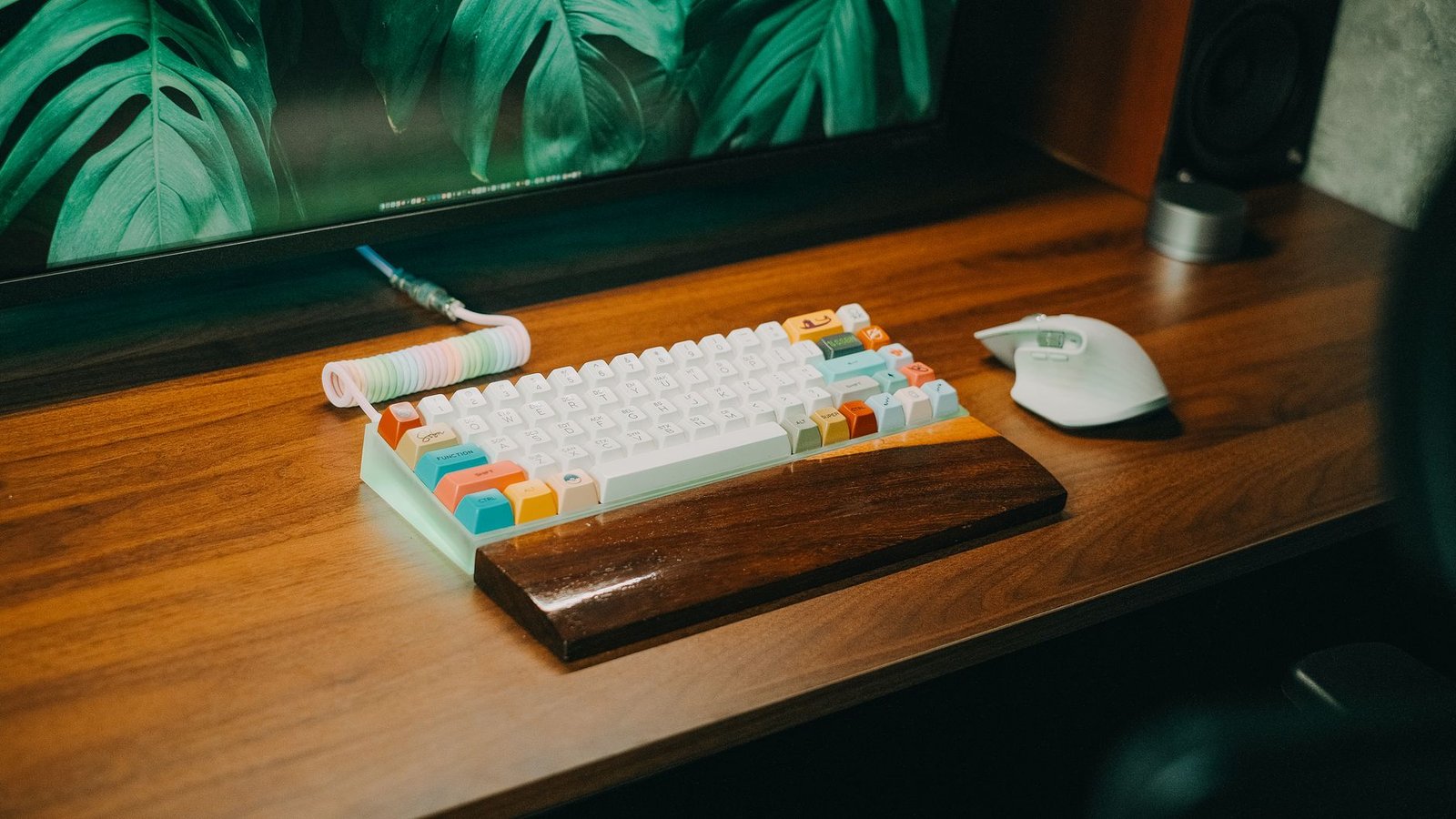
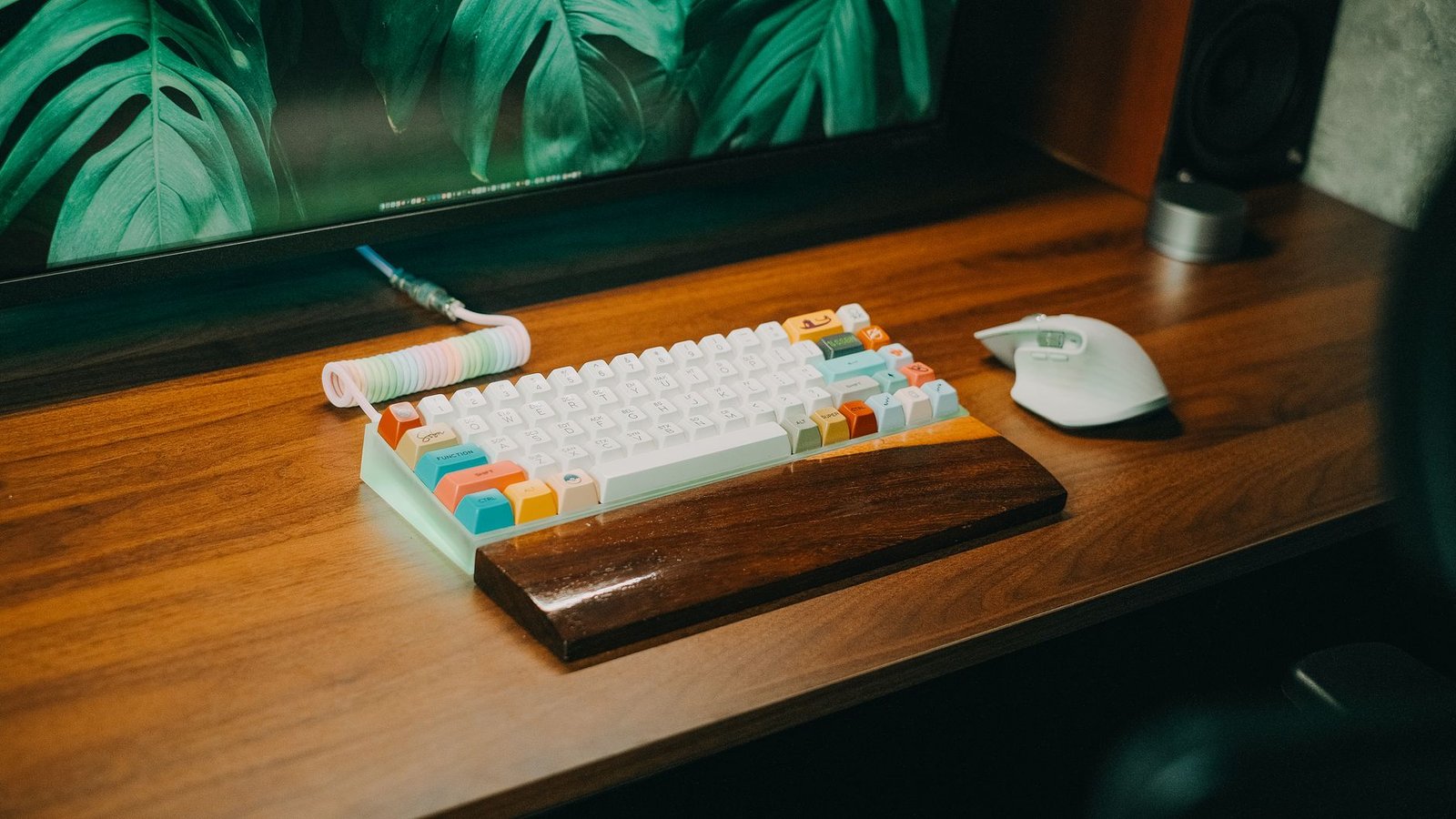
Solid wood rests (ash, walnut, bamboo) are firm, don’t compress over time, and wipe clean with a dry or slightly damp cloth. They’re the most durable of the three, and they pair well with mechanical keyboards, which tend to sit taller than slim membrane boards.
Best for: mechanical keyboards, anyone who finds soft rests too squishy, people who want a rest that looks like a deliberate part of the desk.
Trade-offs: no cushioning, so they can feel hard during long sessions, and they’re usually the most expensive of the three.
Memory Foam
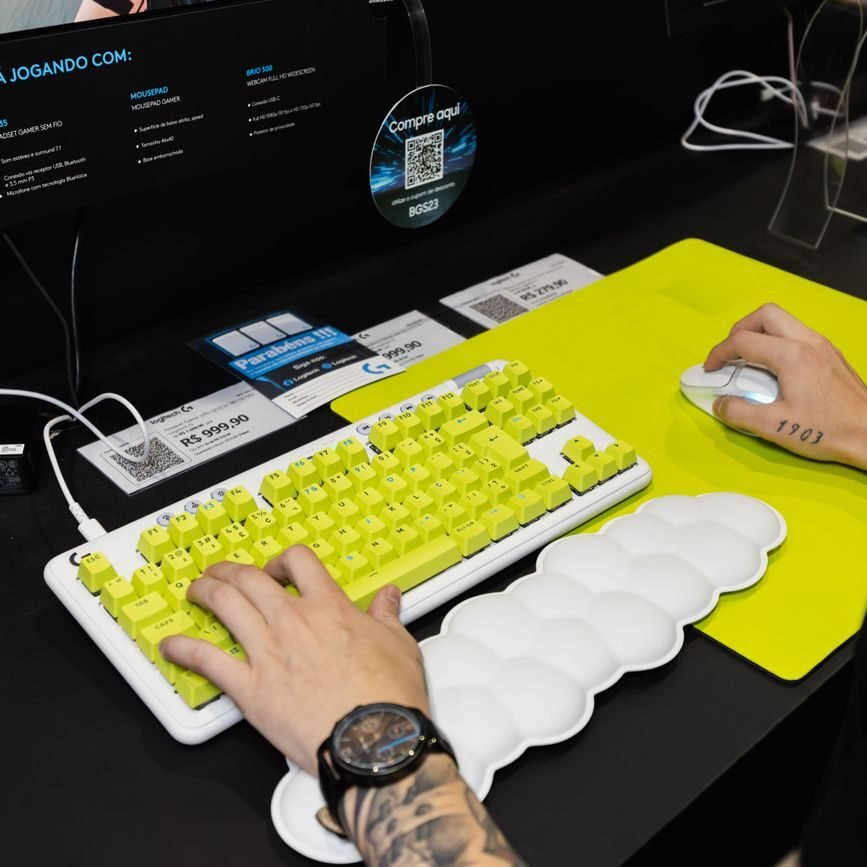
Memory foam molds to your palms and offers the plushest, softest support. Most come with a leatherette or fabric cover and a rubber base that grips the desk.
Best for: people who want maximum softness and cushioning, and typists who pause frequently throughout the day.
Trade-offs: foam traps body heat, so it can feel warm over long sessions, and it compresses over time. Many reviewers suggest replacing foam rests roughly every 6 to 12 months to keep the support from flattening out.
Cooling Gel (Gel-Infused Foam)
Gel rests are either pure gel or, more commonly, memory foam infused with a cooling gel layer. They sit between foam and wood in firmness and stay noticeably cooler than plain memory foam.
Best for: long sessions, warm rooms, and anyone who finds plain memory foam too hot.
Trade-offs: pure gel can feel firmer than foam, and gel-infused rests still compress with long-term use, though the cooling layer helps with comfort during use.
Cleaning, Durability & Care: Head-to-Head
Wood
The easiest to maintain. A dry or lightly damp cloth removes dust and fingerprints, and since the material doesn’t compress, it holds its shape for years. Check the finish: a sealed, sweat-resistant coating holds up better to daily skin contact than raw wood.
Memory Foam
Leatherette covers wipe clean in seconds, while fabric covers breathe better but hold on to dust and sweat. Either way, the foam core slowly flattens with use, which is the main reason it needs replacing sooner than wood.
Cooling Gel
Most gel-foam rests use a water-resistant fabric cover that’s easy to wipe down. Like foam, the cushioning wears down over time, though the cooling properties tend to hold up well until the foam itself compresses.
Wood vs. Memory Foam vs. Gel: Side-by-Side Comparison
| Feature | Wood | Memory Foam | Cooling Gel |
|---|---|---|---|
| Softness | Firm, no give | Softest, molds to palm | Medium, cushioned |
| Heat build-up | None | Can run warm | Stays cooler |
| Durability | Very long-lasting | Compresses over time | Compresses over time |
| Cleaning | Easiest (dry or damp cloth) | Easy (leatherette) / moderate (fabric) | Easy (water-resistant cover) |
| Best keyboard type | Taller mechanical boards | Slim and standard boards | Any, especially long sessions |
| Typical lifespan | Years | ~6–12 months of daily use | ~6–12 months of daily use |
| Typical cost | $$–$$$ | $–$$ | $$ |
| Best for | Firm support, desk aesthetic | Maximum cushion | Comfort without heat |
Common Mistakes to Avoid
⚠️ Before You Buy: Check These First
- Ignoring keyboard height: A rest that doesn’t match your keyboard’s height defeats the purpose. Measure the height of the keys you type on most, then match your rest to it as closely as you can.
- Buying the wrong length: A full-size rest under a TKL or 65% keyboard leaves one end hanging off the edge, and a short rest under a full-size keyboard leaves one hand unsupported. Match the rest to your keyboard’s layout (compact, TKL, or full-size).
- Typing with your wrists anchored on the rest: A rest is for pauses, not for planting your wrists while your fingers reach. If you catch yourself doing this, lift your hands slightly while typing and use the rest between bursts.
- Choosing softness over support: Very soft foam feels great for the first week, then flattens out. If you type for hours daily, a firmer or gel-infused option often holds up better.
- Skipping the non-slip check: A rest that slides around while you move your mouse or adjust your hands is more annoying than helpful. Look for a rubber or silicone base, especially on smooth desks or desk mats.
- Forgetting about replacement: Foam and gel rests wear down. If yours has visibly flattened, it’s no longer giving you the support it was bought for.
Recommended Product Picks
Wood
🏆 Premium Pick: Glorious Gaming Wooden Wrist Rest A solid wood rest with a protective finish designed to resist sweat and skin oils, sized to pair with the taller profile of most mechanical keyboards. It cleans up with a quick wipe and doesn’t compress over time, so it keeps its shape for years.
Check Current Price on Amazon →
💰 Value Pick: Walnut Wooden Wrist Rest A firm, natural-material rest made from solid wood with a walnut finish. A solid choice if you want the durability and clean look of wood without paying for a more premium brand.
Check Current Price on Amazon →
Memory Foam
🏆 Premium Pick: Razer Ergonomic Wrist Rest A plush memory foam cushion wrapped in a waterproof, easy-clean leatherette cover, with anti-slip rubber feet that keep it planted on your desk. Sized for full-size keyboards, with a gentle angled design.
Check Current Price on Amazon →
💰 Budget Pick: Redragon Meteor Wrist Rest A soft memory foam rest with an anti-slip rubber base, available in a TKL size (about 14 inches) and a full-size version (about 17 inches), so you can match it to your keyboard layout without overbuying.
Check Current Price on Amazon →
Cooling Gel
🏆 Best All-Around Pick: HyperX Wrist Rest Cooling gel-infused memory foam with anti-fray stitching and an anti-slip base, available in multiple sizes. It’s a strong middle ground for people who want cushioning without the heat that plain foam tends to build up.
Check Current Price on Amazon →
Our Verdict
A wrist rest is worth it if you pick the right height, use it for pauses instead of anchoring your wrists while typing, and choose a material that fits how you work. Wood is the long-term, no-fuss choice for mechanical keyboards. Memory foam is the softest option, with the trade-off of heat and faster wear. Cooling gel sits in the middle, keeping things comfortable through long sessions without running hot.
If you’re not sure where to start, a gel-infused foam rest is the safest all-around choice. If you want something that lasts for years and matches a taller mechanical keyboard, go wood.
If you’re dealing with ongoing wrist pain, numbness, or tingling, a wrist rest isn’t a fix. It’s worth talking to a doctor or an ergonomics specialist, since the cause may be your desk setup, your typing technique, or something that needs medical attention.
Our team also breaks down what size keyboard is best for your workflow or gaming needs! Check out the full article here!
Slatewave tests desk gear the way we’d actually use it, on real desks, over real workdays. Have questions about picking a rest for your specific keyboard? Drop them in the comments!